
Yorfi: AI Agents for Smarter Client Relationship Management

Managing client relationships is one of the most important responsibilities for any growing business. Strong relationships can lead to repeat purchases, referrals, long-term contracts, and greater customer loyalty. However, maintaining those relationships becomes increasingly difficult as a company takes on more clients.
Sales representatives and account managers often spend a large part of their day tracking conversations, following up with prospects, updating records, preparing information, and responding to routine questions. This is where artificial intelligence is beginning to play a bigger role.
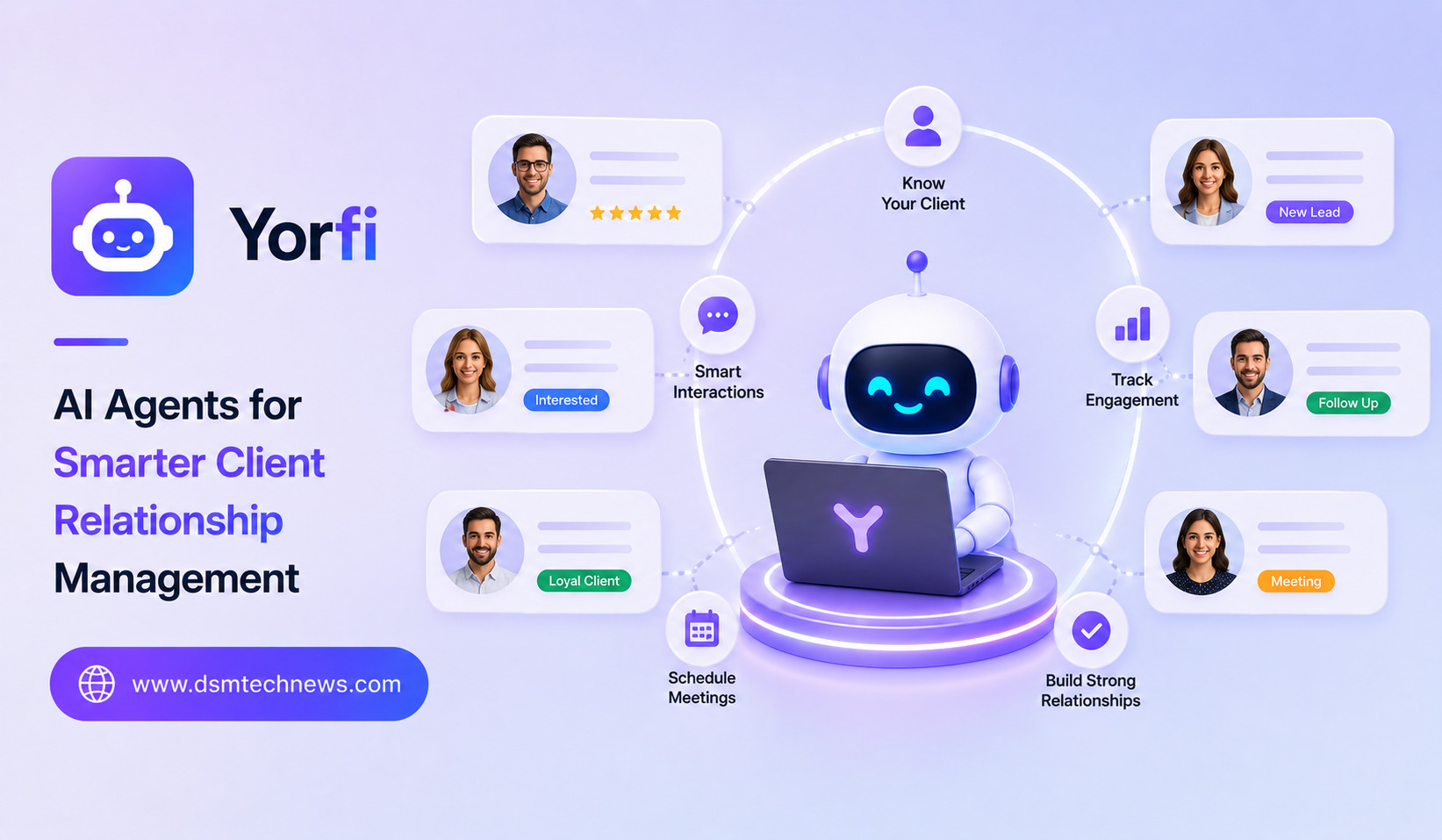
Yorfi represents the growing use of AI agents for client relationship management. Instead of using AI only to generate text or answer individual questions, AI agents can support ongoing customer workflows and help businesses manage interactions more efficiently.
What Is Yorfi?
Yorfi is an AI-focused approach to client relationship management that uses AI agents to assist businesses with customer-facing activities.
The idea behind AI-powered relationship management is to give digital agents specific responsibilities within the customer journey. These responsibilities can include organizing customer information, supporting communication, tracking follow-ups, identifying opportunities, and assisting with routine interactions.
Traditional customer relationship management systems primarily act as databases and organizational tools. They store contact information, sales activities, notes, and communication histories.
AI agents can add another layer by helping businesses interpret this information and take action based on it.
Why Client Relationship Management Needs AI
As businesses grow, customer relationships become harder to manage manually.
A small business owner may personally remember when to contact every client. But managing hundreds or thousands of customer relationships requires structured processes.
Important follow-ups can be missed. Customer information can become scattered across emails and messaging platforms. Sales representatives may not have enough time to review every interaction before contacting a client.
AI agents can help reduce some of these challenges by monitoring information, organizing conversations, and supporting repetitive relationship-management tasks.
The goal is not to remove humans from customer relationships. Instead, AI can help ensure that employees have better information and more time to focus on meaningful conversations.
AI Agents for Customer Follow-Ups
Following up consistently is essential in sales and client management.
A potential customer might request information today but be ready to make a decision several weeks later. Without a structured follow-up process, the opportunity can easily be forgotten.
AI-powered workflows can help identify when follow-ups are due and assist with preparing appropriate messages.
This can make communication more consistent while reducing the administrative burden on sales teams.
However, businesses should avoid sending generic automated messages repeatedly. Effective AI-assisted follow-ups should use the available context and remain relevant to the customer’s situation.
Organizing Client Information
Client relationship management involves dealing with large amounts of information.
Businesses may need to track contact details, previous conversations, product interests, purchases, requests, complaints, meeting notes, and other relevant information.
AI agents can help organize this information and make it easier for employees to understand a customer’s history.
For example, before a sales call, an employee could review an AI-generated summary of previous interactions rather than manually searching through multiple messages.
This can save time and help employees enter conversations better prepared.
Supporting Sales Teams
AI agents can be particularly useful during the early stages of the sales process.
When a new prospect contacts a company, the AI system can help collect basic information and identify the customer’s requirements. It can also assist in categorizing prospects based on their interests or stage in the buying process.
Sales representatives can then focus their attention on leads that require direct human engagement.
AI can also help prepare sales representatives for meetings by summarizing previous conversations and highlighting relevant customer concerns.
This creates a more efficient sales workflow without eliminating the personal side of selling.
Improving Customer Communication
Customers expect businesses to respond quickly and accurately.
AI agents can help provide responses to common questions, particularly when the information is already available in a company’s knowledge base.
For example, a customer might ask about product features, service availability, account procedures, or general company policies.
An AI agent can potentially provide an immediate response or collect the customer’s information before transferring the conversation to an employee.
This can reduce waiting times while allowing human support teams to focus on more complicated issues.
Personalization Through AI
One of the biggest opportunities in AI-powered CRM is personalization.
Customers generally do not want to feel like anonymous records in a database. They expect businesses to understand their needs and previous interactions.
AI agents can analyze customer context and help businesses create more relevant communication.
For example, a business could tailor a message based on a customer’s previous purchase, current inquiry, or stage in the sales journey.
Personalization does not necessarily mean sending more messages. It means making each interaction more useful.
Businesses should also be careful about privacy. Customer data should only be used in appropriate ways and according to applicable privacy requirements.
AI Agents and Customer Retention
Winning a new customer can be more expensive than maintaining a strong relationship with an existing one. This makes retention an important part of client management.
AI can help businesses monitor customer interactions and identify signals that may require attention.
For instance, declining engagement, repeated complaints, unresolved support requests, or changes in purchasing behavior could indicate that a client needs additional support.
AI should not automatically assume why a customer is unhappy, but it can help employees notice patterns that might otherwise be overlooked.
This gives account managers an opportunity to intervene before a small issue becomes a larger relationship problem.
Benefits of Yorfi-Style AI Relationship Management
Businesses adopting AI agents for CRM can potentially gain several advantages.
Better productivity: Employees spend less time on repetitive administrative work.
Faster responses: AI can assist with routine customer inquiries and communication.
Consistent follow-ups: Automated workflows can help reduce missed opportunities.
Improved preparation: AI-generated summaries can help employees understand client history before meetings.
Scalable relationship management: Businesses can manage larger customer volumes without increasing administrative work at the same pace.
More focused employees: Sales and account teams can spend more time building relationships and solving customer problems.
These benefits depend on implementation. AI should support a well-designed CRM process rather than compensate for a poorly organized one.
Challenges Businesses Need to Consider
AI-powered CRM also comes with risks.
The most obvious concern is accuracy. If an AI agent misunderstands customer information or generates an incorrect response, it could damage a business relationship.
Human oversight is therefore important, particularly for sensitive communications and important customers.
Data privacy is another major consideration. CRM systems can contain valuable business and customer information. Companies should understand what data AI systems can access and how that data is stored and processed.
Businesses should also establish clear rules about which actions AI can perform independently and which actions require employee approval.
For example, an AI agent might be allowed to draft a follow-up email but require a salesperson to approve it before sending.
The Future of AI-Powered CRM
The future of customer relationship management is likely to involve more autonomous AI agents.
Instead of simply storing customer data, CRM platforms may increasingly become active systems that monitor interactions, identify tasks, prepare recommendations, and coordinate workflows.
An AI agent could potentially recognize that a customer needs follow-up, review previous conversations, prepare a personalized message, and notify the appropriate employee.
This would turn CRM from a passive record-keeping system into a more proactive relationship-management environment.
Human employees would still remain central to important decisions and relationship-building, while AI handles much of the supporting work.
Conclusion
Yorfi highlights the growing potential of AI agents for smarter client relationship management. By assisting with customer communication, follow-ups, information organization, sales activities, and retention workflows, AI can help businesses manage relationships more efficiently.
The real value of AI in CRM is not simply automation. It is the ability to give employees better context and reduce the repetitive work that can distract them from customers.
As AI agents become more capable, businesses may increasingly combine human relationship skills with automated digital assistance. Companies that find the right balance can improve responsiveness and productivity while preserving the personal connections that make client relationships valuable.
Managing client relationships is one of the most important responsibilities for any growing business. Strong relationships can lead to repeat purchases, referrals, long-term contracts, and…