
AI Product Photography: Create E-commerce Images Without a Studio

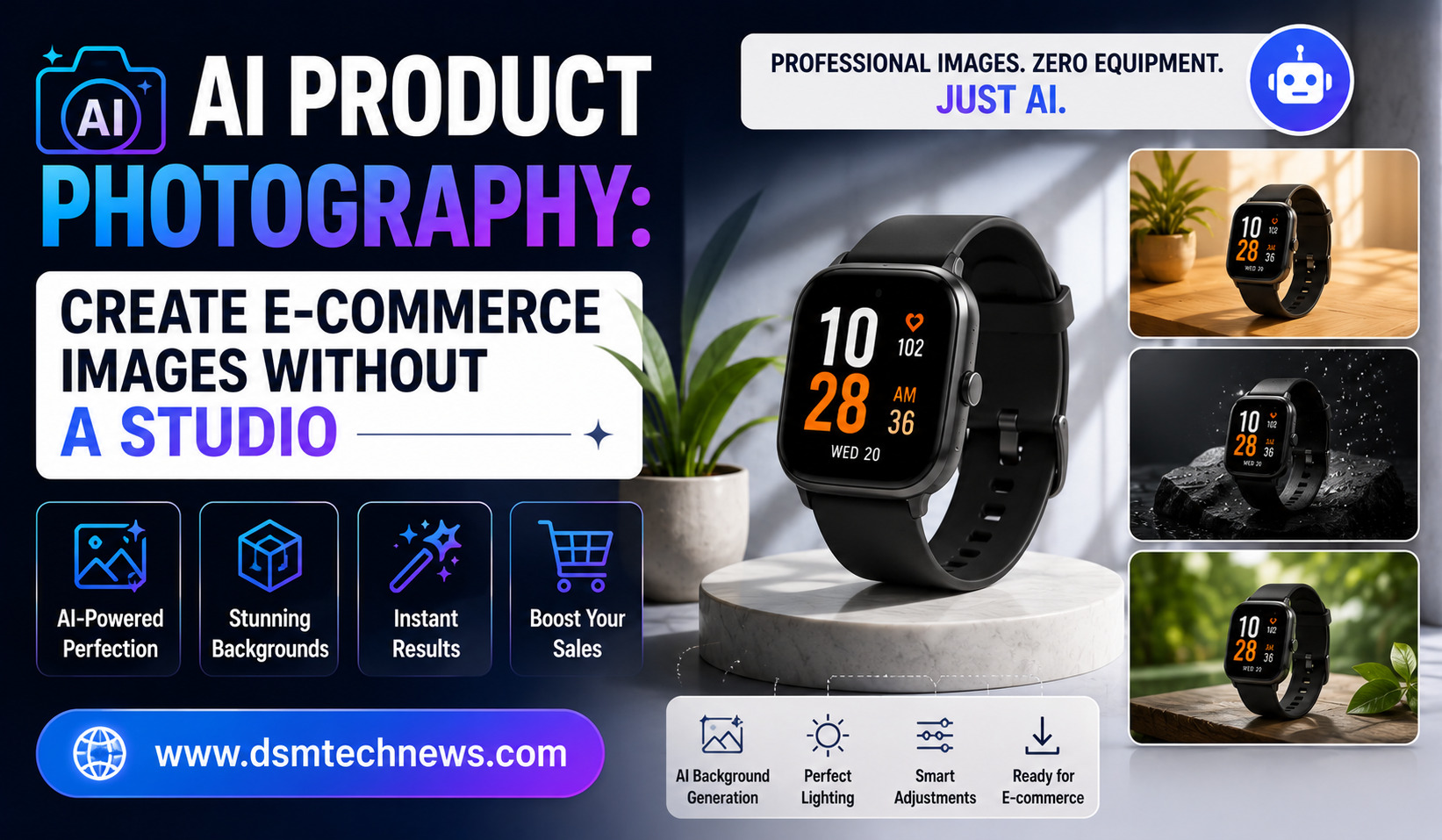
Product photography has always been an important part of e-commerce. Customers cannot physically touch or examine an online product, so photographs often become one of the main factors influencing their buying decisions. A clear, attractive product image can make an item look trustworthy and professional, while a poor-quality photograph can make even a good product appear less appealing.
Traditionally, creating professional product photographs required a camera, lighting equipment, backgrounds, props, a suitable location, and sometimes a professional photographer. For small businesses and new online sellers, these costs can quickly become difficult to manage.
Artificial intelligence is changing that process. With modern AI image generation and editing tools, sellers can take a basic product photograph and transform it into a polished e-commerce visual without building a traditional photography studio.
AI product photography does not necessarily mean creating a completely fictional product. In many cases, the original product photo becomes the foundation, while AI changes the background, environment, lighting, composition, or surrounding elements.
What Is AI Product Photography?
AI product photography is the use of artificial intelligence to create, improve, or transform product images for online stores and digital marketing.
A seller can photograph a product using a smartphone and then use AI to remove the background, improve the lighting, create a studio environment, place the product in a lifestyle setting, or expand the image for different platforms.
For example, a small business selling skincare products could take a simple photograph of a bottle on a table. AI could then place that bottle in a premium bathroom environment surrounded by subtle natural elements, while preserving the actual appearance of the product.
This can make the final image look considerably more professional without requiring an expensive photography setup.
Why AI Product Photography Is Becoming Popular
The biggest advantage of AI product photography is accessibility. A professional studio is no longer the only way to produce polished commercial visuals.
A small online seller can start with a smartphone photograph and improve it using AI. This can be particularly useful for businesses that regularly introduce new products and cannot afford to arrange a professional photoshoot every time.
AI can also speed up the creative process. Instead of photographing the same product in several different environments, a seller can create multiple visual concepts digitally.
One product might be shown against a clean white background for an online marketplace, while another version could place it on a modern desk for social media advertising.
Start With a Good Product Photograph
AI can do a lot, but the quality of the original product photograph still matters.
Try to photograph the product clearly with good focus and sufficient lighting. Avoid excessive reflections, heavy shadows, cluttered backgrounds, and objects covering important parts of the product.
A simple photograph against a plain background is often an excellent starting point.
Make sure the product itself is visible from the angle you want customers to see. AI can modify the surrounding environment, but changing the actual shape or design of a product can create inaccurate results.
Remove the Original Background
One of the easiest applications of AI is background removal.
A basic product photograph can be converted into a clean product image with a plain background. This is especially useful for online stores where consistency between product listings matters.
For example, a seller could upload a photograph of a pair of shoes and request a clean white background while keeping the shoes unchanged.
The resulting image can look much closer to professional catalog photography.
Create a Professional Studio Background
AI can also create a virtual studio around the product.
Instead of photographing a product against a physical background, you can ask an AI tool to place it on a clean surface with carefully controlled lighting.
A useful instruction could be:
“Place this product in a premium studio environment with a soft neutral background, realistic surface shadows, subtle reflections, professional commercial lighting, and a clean luxury aesthetic. Keep the product’s shape, color, logo, proportions, and details unchanged.”
The important part of this instruction is telling the AI not to modify the actual product.
Create Lifestyle Product Images
Lifestyle photography shows a product being used in a realistic environment.
This type of image can help customers understand how a product fits into everyday life.
For example, a coffee mug could be placed on a modern breakfast table, a laptop could appear on a professional desk, or a skincare bottle could be shown in an elegant bathroom.
AI can create these environments without requiring a physical location.
A useful prompt might be:
“Place this exact skincare bottle on a modern bathroom counter with soft morning sunlight, subtle green plants, realistic shadows, and a premium lifestyle photography style. Preserve the bottle’s original shape, label, color, and proportions.”
AI Product Photography for Clothing
Fashion businesses can use AI to create different visual presentations of clothing.
A product photograph of a shirt can potentially be placed on a model, displayed against a studio background, or presented in a lifestyle environment.
However, clothing details need to remain accurate. The AI should not change the color, pattern, logo, material, or design of the garment if the image is being used to represent the actual product.
For e-commerce, accuracy is more important than simply making the image look attractive.
AI Product Photography for Beauty Products
Beauty and skincare products are especially suitable for AI-generated lifestyle environments.
A simple cosmetic bottle can be transformed into a premium-looking scene with natural elements, water droplets, elegant surfaces, soft lighting, and subtle shadows.
This can create campaign-quality visuals for websites, advertisements, social media, and promotional banners.
The product itself should remain visually accurate, particularly when labels, packaging, colors, and branding are important.
AI Product Photography for Food
Food businesses can also experiment with AI-generated environments.
A basic photograph of packaged food can be placed on a kitchen counter, restaurant table, picnic setup, or other relevant environment.
For prepared dishes, AI can help create attractive backgrounds and compositions. However, sellers should be careful about using generated images that make the actual food appear significantly different from what customers will receive.
For online food businesses, visual appeal should support accurate representation rather than replace it.
Creating Multiple Backgrounds From One Photo
One of the most useful advantages of AI product photography is the ability to create several variations from the same source photograph.
A single product can be shown on a clean white background, a luxury surface, a home environment, a professional office, or an outdoor setting.
This can save time because the seller does not need to arrange a separate physical shoot for every visual concept.
It also makes it easier to create different images for product pages, advertisements, social media, email campaigns, and blog content.
Creating Seasonal Product Images
AI can also help businesses create seasonal marketing visuals.
A product could be placed into a festive environment for a holiday campaign, a warm setting for winter marketing, or a bright outdoor environment for summer promotions.
For example, a gift product could be placed on an elegant festive table with appropriate decorative elements while maintaining the original product’s appearance.
This allows businesses to refresh their marketing visuals without arranging a new photoshoot every season.
AI Product Photography for Amazon and Other Marketplaces
Online marketplaces often have specific image requirements. Sellers should always check the current rules of the marketplace they use before publishing AI-edited product images.
A clean main image may be appropriate for a product listing, while lifestyle photographs can be useful as additional images.
The important thing is that the final image accurately represents the product. AI should not add features, accessories, colors, or dimensions that the real item does not have.
How to Write an AI Product Photography Prompt
The strongest prompts usually describe the environment while clearly protecting the product from unwanted changes.
Instead of simply writing:
“Make this product look professional.”
Try something more specific:
“Create a premium commercial product photograph using the uploaded product as the exact visual reference. Place it on a clean marble surface in a modern luxury interior. Use soft natural window lighting, realistic shadows, subtle reflections, shallow depth of field, and high-end advertising photography. Do not change the product’s shape, color, logo, packaging, text, proportions, or physical details.”
This gives the AI both creative direction and restrictions.
Why Product Accuracy Matters
AI-generated product images can look impressive, but businesses need to be careful about accuracy.
If an AI changes the size of a product, modifies its packaging, invents a feature, changes the color, or alters a logo, customers could receive a product that looks different from the advertisement.
This can damage customer trust and potentially create problems for the seller.
AI should therefore be used primarily to improve presentation while preserving the actual characteristics of the product.
AI Photography vs Traditional Studio Photography
Traditional photography still has important advantages. A professional photographer can control lighting, camera settings, lenses, reflections, angles, and physical products with extremely high precision.
AI photography is different. Its strength is speed and flexibility.
A traditional photoshoot may require equipment, preparation, location setup, and post-production. AI can often produce alternative backgrounds and environments much faster.
For small businesses, AI can be a practical way to improve product presentation without making a large upfront investment.
Larger brands may also combine both approaches, using professional photography for highly important campaigns and AI for variations, backgrounds, concept development, and routine marketing content.
Common Mistakes to Avoid
One common mistake is asking AI to completely redesign the product. This may create an attractive image, but the product could lose its original identity.
Another problem is unrealistic lighting. If the product has a strong shadow in one direction while the AI-generated environment has light coming from the opposite direction, the result can look artificial.
Text and logos also require careful inspection. AI-generated lettering can sometimes be distorted or inaccurate, so product packaging should always be checked carefully.
Finally, businesses should not rely entirely on generated images when customers need to see the exact physical appearance of a product. Authentic product photographs remain important for building trust.
The Future of AI Product Photography
AI product photography is likely to become an increasingly important part of e-commerce content creation.
As image-generation and editing systems become better at preserving product identity, sellers may be able to produce highly customized commercial visuals from relatively simple source photographs.
This could be particularly valuable for small businesses that cannot afford frequent professional photography. Instead of renting a studio for every campaign, they may be able to create a basic product photograph and use AI to develop multiple marketing variations.
The technology may also make personalized advertising easier. The same product could potentially be presented in different environments for different audiences, markets, seasons, and campaigns.
Final Thoughts
AI product photography is changing how businesses approach e-commerce visuals. You no longer necessarily need an expensive studio, professional lighting equipment, and a large production budget to create polished product images.
A good original photograph combined with a carefully written AI instruction can produce studio-style backgrounds, lifestyle scenes, seasonal visuals, and advertising variations in much less time.
The most important rule is to keep the real product accurate. AI should enhance the presentation without misleading customers about what they are buying.
For small businesses, online sellers, entrepreneurs, and content creators, this makes AI product photography a powerful tool for creating professional e-commerce images faster and with greater creative flexibility.
Product photography has always been an important part of e-commerce. Customers cannot physically touch or examine an online product, so photographs often become one of…