Best AI Image Generator for Text in Images in 2026

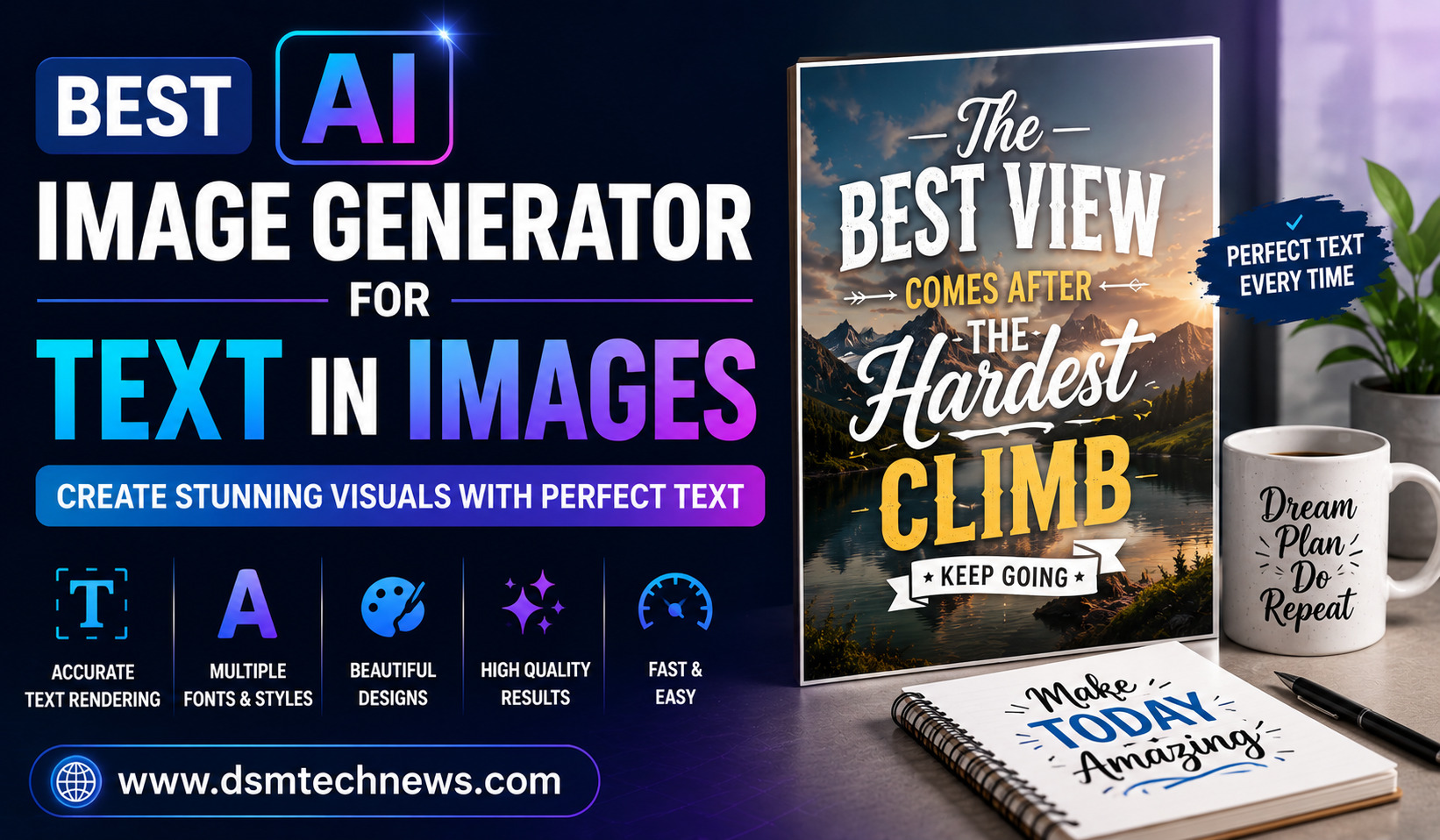
AI image generators have become extremely powerful in 2026, but one challenge has remained particularly important: putting accurate, readable text inside generated images.
Creating a beautiful image is one thing. Creating a poster with the correct headline, a product package with readable wording, a social media graphic with a specific message or a logo containing the right letters is much harder.
Older image-generation models frequently produced misspelled words, distorted letters or random characters. Newer models have improved significantly, and several tools now treat typography as an important part of image generation rather than simply another visual element.
Among the leading options are Ideogram 4.0, GPT Image, Google Gemini and Adobe Firefly. But if your main priority is accurate text inside images, one platform currently stands out.
Ideogram 4.0 – Best Overall for Text in Images
For creators who specifically need accurate text inside AI-generated images, Ideogram 4.0 is one of the strongest choices in 2026.
Ideogram has focused heavily on typography since its early development. Its current Ideogram 4.0 model was released in June 2026 and is designed around text rendering, layout control, prompt alignment and professional design workflows.
Ideogram’s own text-rendering documentation states that its system achieves 95% text accuracy and is designed for posters, signage, packaging, book covers and other typography-heavy designs.
This makes it particularly useful when the exact wording matters.
For example, you could ask Ideogram to create:
- A YouTube thumbnail with a specific headline
- A promotional poster with a campaign slogan
- A book cover with a title and author’s name
- Product packaging with readable text
- A social media advertisement
- A restaurant poster with a menu heading
- A motivational quote graphic
Ideogram 4.0 also provides layout control, allowing users to specify where elements such as headlines, logos and other visual components should appear.
Another useful feature is editable text layers. Ideogram allows users to extract text from generated designs and edit the wording, font or size without regenerating the entire image.
For typography-heavy AI images, this is a major advantage.
Best for: Posters, logos, social media graphics, book covers, advertisements, packaging and text-heavy designs.
GPT Image – Best for Detailed Instructions and Text-Heavy Graphics
GPT Image is another strong option for generating images containing text.
OpenAI’s GPT-Image-1.5, introduced in December 2025, improved instruction following, editing and dense text rendering. OpenAI also describes the model as capable of producing more natural-looking results and better matching user intent.
The major advantage of GPT Image is its conversational workflow.
You can describe exactly what you want and then continue refining the result. If the headline needs to move, the background needs to change or a design element needs to be removed, you can simply describe the change.
This is particularly useful for bloggers and marketers.
For example, you could request:
“Create a modern technology blog thumbnail with the headline ‘Future of AI in 2026’ in large bold white lettering, a futuristic computer background, a clean professional layout and enough empty space around the title.”
You can then ask for another variation without having to start the entire process again.
GPT Image is therefore an excellent choice when text accuracy and general-purpose image editing need to work together.
Best for: Blog thumbnails, marketing graphics, social media posts and conversational image editing.
Gemini Image – Best for Text and Complex Visual Layouts
Google’s Gemini image-generation technology is also a strong competitor for text-heavy visuals.
Recent evaluations of frontier image models have found Gemini 3 Pro Image particularly capable on complex prompts involving embedded text, spatial relationships and multiple visual requirements. One August 2026 benchmark placed Gemini 3 Pro Image first among the models tested, although that benchmark focused on a limited set of difficult prompts rather than every possible image-generation task.
Gemini is particularly interesting when the image contains several components that need to work together.
For example, you might want an infographic containing a title, several labels, icons and multiple objects arranged in specific positions.
Gemini can also be useful when you want to edit an existing image and replace or modify text.
Its conversational workflow makes experimentation easy, particularly for users already working within Google’s AI ecosystem.
Best for: Infographics, posters, multilingual designs, complex compositions and image editing.
Adobe Firefly – Best for Professional Design Workflows
Adobe Firefly is another useful option for text-containing graphics, particularly for professional designers.
Firefly is less focused exclusively on text rendering than Ideogram. Its main advantage is the broader creative environment around image generation and editing.
This matters when an AI-generated image needs additional professional design work.
A designer might generate a background with Firefly, modify the composition, add branding and continue editing the result within Adobe’s wider ecosystem.
For businesses already using Adobe products, this workflow can be more convenient than moving between several different platforms.
Firefly is therefore a strong option for professional marketing graphics, advertising concepts and branded content, even if typography alone is your main requirement.
Best for: Professional designers, marketing teams, branded graphics and Adobe workflows.
Why Ideogram Is So Strong for Typography
The biggest reason to choose Ideogram is that text is treated as a core part of the image rather than an afterthought.
Ideogram says its 4.0 model supports multilingual text rendering, denser type at smaller sizes and reliable rendering of headlines, packaging copy and signage. It also supports 2K photorealistic output and precise layout control.
This is important because typography-heavy designs require more than recognizing individual letters.
The AI needs to understand:
- What the words should say
- Where the words should appear
- How large they should be
- How they should interact with the surrounding image
- What font or typography style is appropriate
- How the text should fit into the overall composition
Ideogram’s design-focused approach gives it an advantage for these tasks.
Best AI Image Generator for YouTube Thumbnails
If you create YouTube thumbnails, text rendering is extremely important.
A thumbnail often needs a short headline that remains readable even when the image is displayed at a small size.
Ideogram is an excellent choice because it can generate the headline as part of the composition.
GPT Image is another strong option, particularly if you want to refine the image conversationally.
For professional creators, a useful workflow can be to generate the basic visual with AI and then make final typography adjustments manually in a design application.
Best AI Image Generator for Posters
For posters, Ideogram 4.0 is one of the best choices.
Posters often combine large headlines, smaller supporting text, images and specific layouts. Ideogram’s focus on typography and layout makes it particularly suitable for this format. Its official materials specifically highlight posters, book covers, signage and marketing designs as use cases.
GPT Image and Gemini are also capable alternatives, especially when the poster requires a more complex illustrated scene.
Best AI Image Generator for Logos
AI-generated logos require extra caution because a logo needs to be simple, consistent and usable across different formats.
Ideogram can be useful for generating logo concepts and typography-based ideas. Its current platform is designed around text, layout and brand-oriented visual creation.
However, an AI-generated logo should generally be treated as a starting concept rather than automatically assuming it is ready for trademark registration or professional brand deployment.
For an important business identity, designers should review the final artwork and verify originality and trademark considerations separately.
How to Get Better Text Results From AI Image Generators
Your prompt can have a major impact on the result.
Instead of simply saying:
“Create a coffee poster.”
Be more specific:
“Create a premium coffee advertisement with the exact headline ‘Fresh Coffee, Every Morning’ in large bold serif typography at the top. Place a realistic cup of coffee in the center, warm morning lighting, dark elegant background and clean premium advertising composition.”
Clearly specifying the exact text, placement and typography style gives the model more information about what you expect.
Ideogram itself recommends explicitly providing the exact words, describing the typography style and explaining where the text should be placed.
For longer passages, however, it is still wise to check every word manually after generation.
Final Verdict
So, what is the best AI image generator for text in images in 2026?
If text accuracy is your number-one priority, Ideogram 4.0 is the strongest overall choice. Its dedicated focus on typography, layout control and editable text makes it particularly well suited to posters, logos, packaging, social media graphics and advertising designs.
GPT Image is an excellent alternative for creators who want strong text rendering combined with detailed instructions and conversational editing.
Gemini is particularly interesting for complex layouts, image editing and multilingual or information-heavy visuals, while Adobe Firefly is a strong choice for professional designers working within Adobe’s broader creative ecosystem.
For most bloggers, marketers and social media creators, the best starting point is Ideogram for typography-heavy images and GPT Image for general-purpose graphics that happen to contain text.
The important thing to remember is that AI image generation is improving rapidly. Even the best models can occasionally make spelling or layout mistakes, so always proofread generated text before publishing an image professionally.
AI image generators have become extremely powerful in 2026, but one challenge has remained particularly important: putting accurate, readable text inside generated images. Creating a…