
Best AI Image Generator for Product Photography in 2026

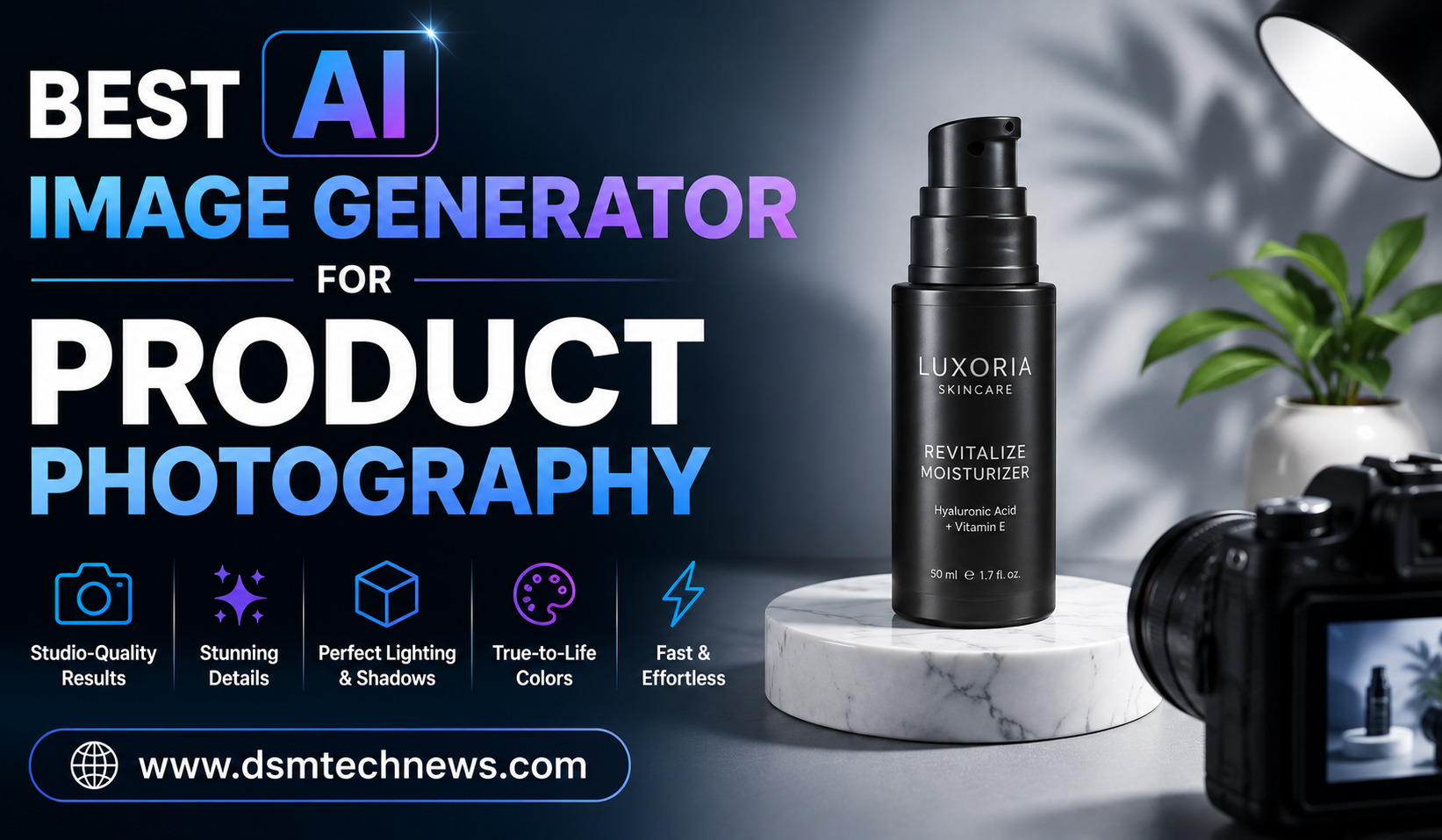
Product photography is one of the most important parts of selling online. A good product image can make an ecommerce listing look professional, build customer confidence and help a product stand out from competitors.
Traditionally, creating high-quality product photographs required a camera, lighting equipment, a studio, props, models and professional editing. AI is changing that workflow in 2026. Today, sellers can upload a basic product photograph and use AI to remove the background, improve lighting, create lifestyle scenes, change environments and generate multiple visual variations.
However, there is an important difference between creating a beautiful image and creating an accurate product image. An AI tool might generate an attractive bottle, shoe or electronic device, but if it changes the logo, packaging, shape or important product details, the image may not be suitable for ecommerce.
So, what is the best AI image generator for product photography in 2026?
What Makes a Good AI Product Photography Tool?
The best AI product photography tool should do more than create an attractive background.
It should preserve the actual product as accurately as possible. This is particularly important for products with packaging, logos, labels, distinctive shapes, textures or small design details.
A strong tool should also provide realistic lighting and shadows. If a product looks artificially pasted onto a background, the final image can appear less professional rather than more professional.
Editing flexibility is another important factor. Sellers may want to place the same product in a bathroom, bedroom, office, outdoor setting or studio without photographing it repeatedly.
For ecommerce businesses, batch processing and consistency also matter. Creating one impressive image is easy compared with creating hundreds of product images that all follow the same visual style.
1. GPT Image – Best Overall for Product Photography
GPT Image is one of the strongest general-purpose choices for AI product photography in 2026.
One of its biggest advantages is its ability to edit an existing product photograph while following detailed instructions. Instead of asking the AI to invent an entirely new product, you can provide a reference image and describe the changes you want.
OpenAI’s ChatGPT Images supports both image generation and editing. Users can upload an existing image and describe changes, while the system can also add text, modify details and create transparent backgrounds.
This makes GPT Image particularly useful for ecommerce sellers.
Imagine you have a basic photograph of a skincare bottle taken against a plain wall. You can ask the AI to place that same product on a marble bathroom counter, add soft natural lighting and create a premium lifestyle composition.
OpenAI has also specifically described GPT Image 1.5 as useful for ecommerce teams creating product image catalogs, including variants, scenes and angles from a single source image.
Best for: Product listings, lifestyle scenes, product variations and conversational editing.
2. Gemini Image – Best for Product Editing and Consistency
Google Gemini is another strong choice for ecommerce product photography.
Gemini’s current image-generation experience uses Nano Banana 2, while paid subscribers can also access Nano Banana Pro for regeneration. Google highlights improved character consistency and the ability to combine multiple images and ideas.
This type of consistency is valuable for product photography because sellers often need several images of the same item.
For example, you could create a hero image of a product, then generate another scene featuring the same product in a different environment. Maintaining the important characteristics of the product is more useful than simply generating a visually similar replacement.
Gemini can also be useful for transforming existing photographs rather than starting from nothing.
Independent 2026 product-photography testing has placed Google’s newer image models among the strongest options for complex product imagery and packaging-related tasks.
Best for: Product editing, lifestyle images, packaging and maintaining consistency.
3. Photoroom – Best Dedicated Tool for Ecommerce Sellers
If your primary goal is ecommerce photography rather than general AI image generation, Photoroom deserves serious consideration.
Photoroom is designed specifically around product images and online selling. Its tools include background removal, AI-generated backgrounds, retouching, virtual models and other features aimed at ecommerce workflows.
A recent 2026 review describes Photoroom as an AI photo editor specifically tailored to ecommerce and business users, with features such as background removal, retouching, virtual clothing models and batch processing.
This dedicated approach is its biggest advantage.
A general-purpose AI generator may be excellent at creating imaginative scenes, but ecommerce sellers often need practical tasks such as removing a background, creating a clean marketplace image or producing multiple versions quickly.
Photoroom is therefore particularly useful for small online sellers who don’t want to learn professional photo-editing software.
Best for: Ecommerce sellers, marketplace listings, background removal and fast product-photo editing.
4. Adobe Firefly – Best for Professional Product Creative Work
Adobe Firefly is a strong choice for businesses that need product photography as part of a larger creative workflow.
Adobe’s Firefly AI Assistant can work with raw product photos and help transform them into broader brand assets. Adobe’s workflow includes retouching product images, creating brand identities, developing packaging mockups and creating social media content.
This makes Firefly particularly attractive to brands already using Adobe’s creative tools.
For example, a company could start with several product photographs, standardize the lighting, create lifestyle variations and then use the resulting assets across advertising and social media.
Firefly is less about simply pressing a button to generate a pretty product picture and more about incorporating AI into a professional design process.
Best for: Brands, designers, marketing teams and Adobe Creative Cloud users.
5. FLUX – Best for Advanced Product Image Generation
FLUX is worth considering for users who want highly realistic results and greater control over the generation process.
FLUX models are widely used for realistic people, objects, product scenes and commercial-style imagery. Some 2026 product-photography comparisons have ranked FLUX.2 highly for product fidelity and value.
The main advantage is flexibility.
Experienced users can incorporate FLUX into more advanced workflows rather than relying only on a simple consumer interface.
However, it may not be the easiest choice for a small seller who simply wants to upload a product and create a marketplace image.
Best for: Advanced creators, developers, agencies and controlled image-generation workflows.
6. Midjourney – Best for Premium Lifestyle Product Images
Midjourney is an excellent option when the objective is a visually striking advertising or lifestyle image.
It can create premium-looking environments around products, making it useful for fashion, beauty, food, luxury goods and creative campaigns.
For example, a perfume bottle could be presented in a dramatic luxury setting with cinematic lighting, reflective surfaces and carefully designed composition.
The limitation is product accuracy.
Midjourney is primarily a creative image-generation platform, so it can reinterpret details of the reference product. That can be acceptable for an advertising concept but problematic when the image needs to show the exact product customers will receive.
Recent 2026 comparisons similarly distinguish Midjourney’s strength in aesthetic quality from tools designed specifically around preserving an actual ecommerce product.
Best for: Advertising concepts, premium campaigns and lifestyle imagery.
7. Recraft – Best for Brand-Focused Product Graphics
Recraft can be useful when product photography overlaps with graphic design.
A business may need more than a photograph. It may also require icons, illustrations, promotional graphics and branded visual elements.
Recraft is particularly interesting for creators who want to combine generated visuals with a consistent brand identity.
For ecommerce brands, this can help create supporting graphics around product launches and marketing campaigns.
Best for: Brand graphics, illustrations, promotional visuals and design-heavy product content.
8. Canva AI – Best for Product Images and Marketing Graphics
Canva AI is another practical option for small businesses and content creators.
The advantage is not necessarily that Canva produces the most photorealistic product image. Its strength is the complete design workflow.
You can create or edit an image and then immediately turn it into an Instagram post, advertisement, banner, product announcement or promotional graphic.
This is especially useful for sellers who need to create marketing material around their products rather than only marketplace photographs.
Best for: Small businesses, social media content and product marketing graphics.
What Is the Best AI Tool for Amazon and Ecommerce Product Photos?
For ecommerce sellers, the answer depends on the type of image you need.
If you need to preserve the actual product, GPT Image and Gemini are strong options because they can work from reference images and perform detailed edits. OpenAI specifically highlights product-catalog workflows for GPT Image, while Google’s current Gemini image tools emphasize generation, refinement and consistency.
If you want a tool built specifically around ecommerce photography, Photoroom is one of the most practical choices.
If your priority is premium lifestyle advertising, Midjourney can produce highly attractive results.
For professional creative teams, Adobe Firefly offers a broader editing and branding workflow.
Should You Generate the Product From Scratch?
For real ecommerce products, it is usually safer to start with an actual photograph of the product.
The reason is simple: your product already exists, so you don’t want the AI to accidentally redesign it.
Use AI to generate the environment around the product rather than asking the model to invent the product itself.
For example, instead of:
“Create a realistic image of my skincare bottle on a luxury bathroom counter.”
Start by uploading your actual bottle photograph and ask the AI to place that product in the desired environment.
This approach can help preserve packaging, shape, colors and other important details.
How to Create Better AI Product Photos
Start with a clean reference photograph. Use good lighting and make sure the product is clearly visible.
Then describe the scene you want. Mention the surface, background, lighting, camera angle and overall mood.
For example:
“Use the uploaded product exactly as shown. Place it on a light marble bathroom counter with soft morning sunlight coming from the left. Add subtle natural shadows and a clean luxury skincare aesthetic. Keep the packaging, logo, colors and proportions unchanged.”
After generating the image, inspect it carefully.
Pay particular attention to the logo, packaging text, product shape, buttons, labels and other small details. Even advanced AI models can introduce subtle changes.
Final Verdict
So, what is the best AI image generator for product photography in 2026?
For most businesses, GPT Image is one of the best overall choices because it combines strong image editing, detailed instruction following and the ability to work from existing product photographs. OpenAI itself positions its image tools for ecommerce catalog creation and product-image workflows.
Gemini is a close competitor, particularly for image editing and maintaining consistency across creative transformations.
If you want a tool built specifically for ecommerce, Photoroom is an excellent practical choice. For professional brand workflows, Adobe Firefly stands out, while FLUX is attractive to advanced users who want more control. Midjourney is better suited to premium lifestyle and advertising concepts than exact product reproduction.
The most important rule is simple: use AI to enhance the presentation of your real product, not to accidentally redesign it.
For ecommerce sellers, accurate product representation matters more than having the most beautiful AI-generated background. A great AI product photo should make the product look professional while still making sure customers see what they will actually receive.
Product photography is one of the most important parts of selling online. A good product image can make an ecommerce listing look professional, build customer…